


Artificial intelligence is now part of everyday conversation. People see it in headlines at work and in public debate. Many of those headlines warn that AI will replace workers, erase careers and make human effort less valuable. That fear is understandable. New technologies often create uncertainty before their real effects become clear.
But the evidence tells a more careful story. AI is changing work, yet the change is not simply a battle between humans and machines. It is changing which tasks people do, how they do them and which skills matter most.[3][5][6]
That difference is important. A job is not one single action. Most jobs are made up of many tasks. Some of those tasks can be automated. Others still need human judgment, empathy, responsibility and trust.[2][3][6] The real question is not whether AI will erase all work. The real question is how people, companies and governments choose to use it.[10][12][14]
Why the 47 percent number became famous
Much of today’s debate can be traced to a widely discussed study from Oxford.[1] It estimated that 47 percent of U.S. jobs were at high risk of computerization over the coming decades.
The number spread fast because it was simple and dramatic. Yet later research looked at the issue in a different way.
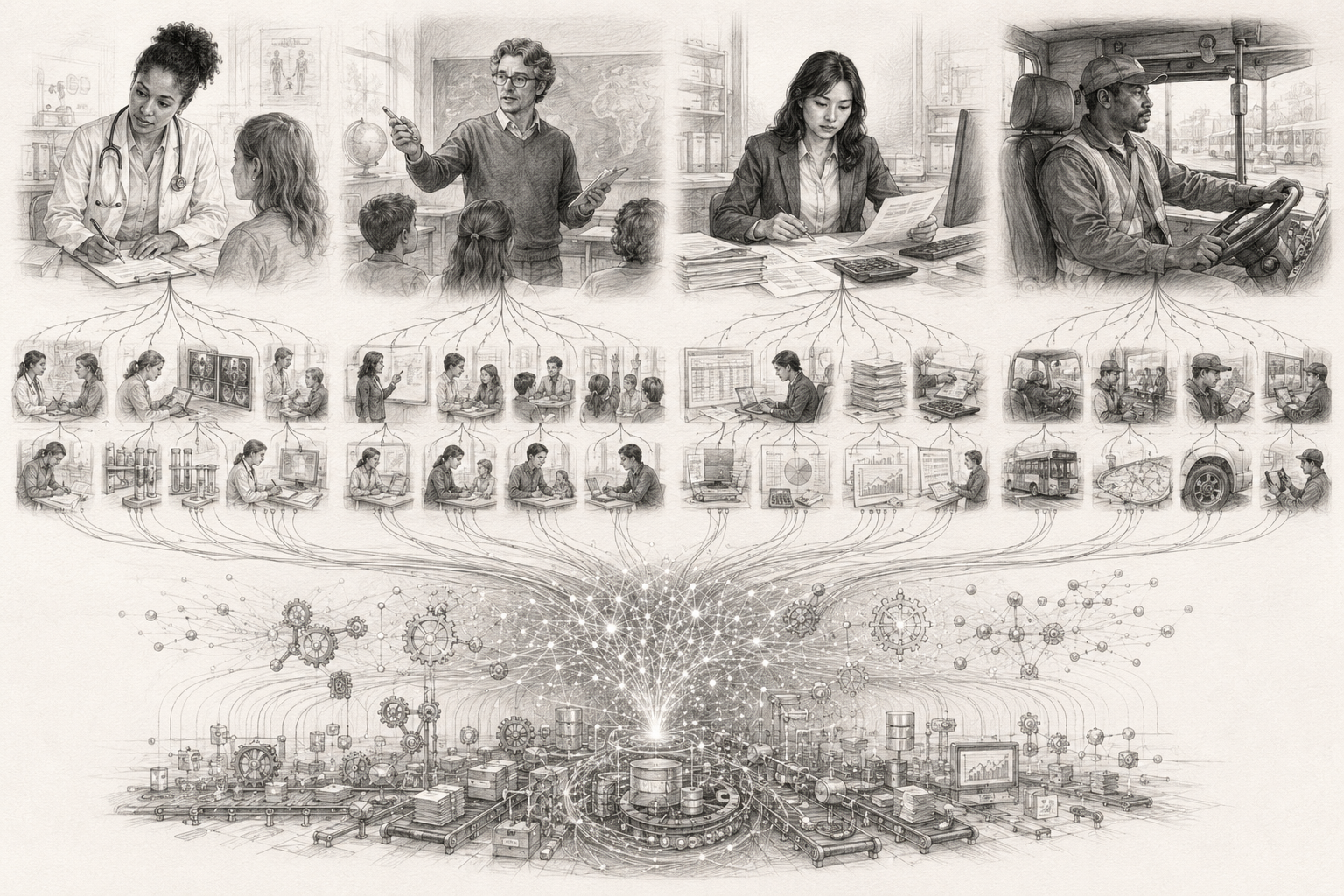
The OECD examined the tasks inside jobs rather than treating each occupation as one fixed unit.[2] It found a much lower risk estimate across OECD countries. The point was not that one study was right and the other was wrong. The point was that the method matters. A doctor does not only read scans. A teacher does not only deliver lessons. A truck driver does not only drive. Most jobs combine tasks that machines can do with tasks that still need people.[2][3]
This is why many economists now talk about task change instead of job replacement.[3][6] AI may automate part of a job while also creating new tasks that did not exist before.[3]
What this means
When people ask whether AI will replace teachers, doctors, accountants or engineers, they are often asking the wrong question.
A better question is this:
Which parts of those jobs can AI perform and which parts still require people?
What history teaches us about automation
One of the clearest findings in labor economics is that automation usually begins with routine work.[5][6]
These are tasks that follow clear rules and predictable procedures.
Calculations.
Data entry.
Scheduling.
Basic document processing.
Repetitive manufacturing work.
Tasks that require creativity, flexibility, communication, leadership, ethical judgment or complex decision making have historically been much harder to automate.[5][6]
This helps explain labor market polarization. Over several decades, many middle skill jobs became less common while demand grew at both the high skill and lower skill ends of the labor market.[5][6]
Technology did not simply eliminate work. It reshaped it.
AI is likely to continue that pattern.
What the data says about job loss
Concerns about displacement are not imaginary.
Research by Daron Acemoglu and Pascual Restrepo found that increased adoption of industrial robots in parts of the United States was linked with lower employment and lower wages in some affected regions.[4] The effects were especially strong for workers without college degrees.[4]
This matters because it shows that technological progress can create winners and losers. The benefits of innovation are not always shared evenly.
At the same time, this is very different from saying that most workers will become permanently unemployable. History shows that technological change often removes some tasks while also creating new kinds of work.[3]
The final outcome depends on whether economies can create new opportunities quickly enough to balance the disruption.
Generative AI changes the equation
The arrival of generative AI has opened a new chapter in the automation story.
Unlike earlier systems, large language models can handle many cognitive tasks that once seemed uniquely human. They can draft reports. Summarize information. Generate code. Answer questions. Analyze documents. Support research.
Yet the earliest evidence suggests that these systems often work best as collaborators rather than replacements.
In one study, customer support agents who used generative AI became significantly more productive.[7] The largest gains were seen among less experienced workers.[7] The technology helped newer employees perform more like top performers.
Another study involving professional consultants found that workers using generative AI completed more tasks and often produced higher quality work.[8]
But the same study also showed an important limit. When participants relied on AI for tasks beyond the technology’s reliable capabilities, performance sometimes declined.[8] The researchers called this the jagged technological frontier.[8]
In plain language, AI can be very useful. But it is not reliable in every situation.
Human judgment still matters.
What this means
The future may not belong to workers who compete against AI.
It may belong to workers who learn how to work well with AI.
Why productivity gains take time
Many people expect new technology to create immediate economic growth. History suggests otherwise.
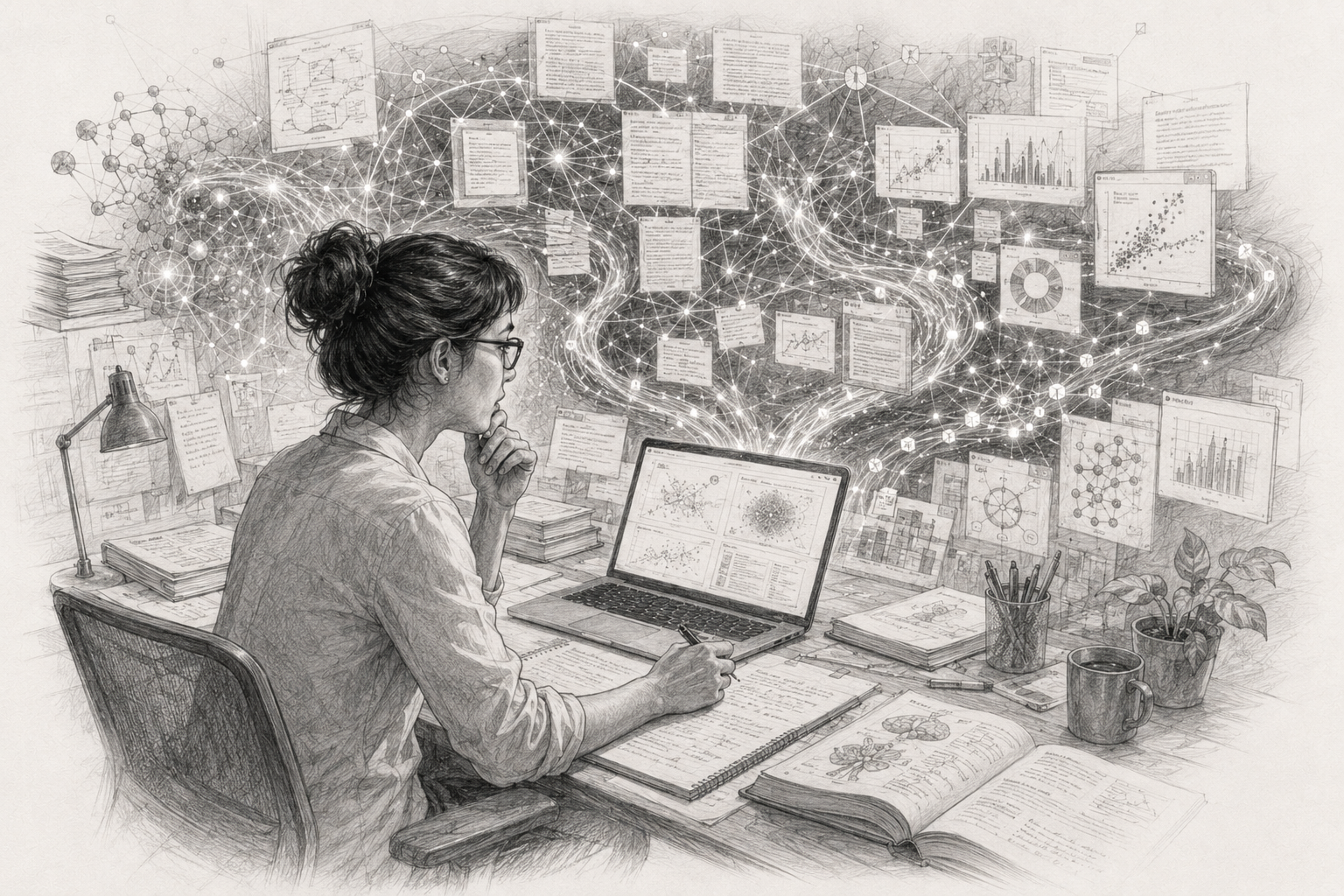
Economists Erik Brynjolfsson, Daniel Rock and Chad Syverson describe a productivity J curve.[9] Major technologies often need years of organizational adaptation before their full benefits become visible.
Businesses must redesign workflows.
Employees must learn new skills.
Institutions must adjust.
The same pattern may happen with AI.
Buying an AI tool is easy. Building an organization that uses it well is much harder.
That is why the future of work is not only a technological issue. It is also an organizational and human one.
The new work AI creates
One of the most overlooked parts of automation is that new technology often creates new kinds of work.[3]
AI is already increasing demand for people who can evaluate outputs, monitor performance, audit systems, investigate failures, improve data quality, support compliance and manage AI safety and governance.
Researchers Sebastian Raisch and Sebastian Krakowski describe this as the tension between automation and augmentation.[10] Organizations can use AI to replace human effort. Or they can use it to expand human capability.
Most real world uses will probably combine both.
Accountability cannot be automated
Perhaps the most important lesson from the broader AI literature is that responsibility remains human.[11][12]
An algorithm can generate recommendations. It cannot accept moral responsibility. It cannot be held ethically accountable. It cannot stand before a court.
As AI systems influence decisions in healthcare, employment, finance and education, human oversight becomes even more important.[11][12][13] The more capable AI becomes, the more important human judgment may become.
Not less.
What remains uncertain
Despite rapid progress, researchers still do not know the long term employment effects of generative AI.[15]
Some occupations will change significantly.
Some tasks will disappear.
Some new forms of work will emerge.
The exact balance is still uncertain.
What is clear is that technological outcomes are not predetermined. Public policy matters. Education matters. Corporate strategy matters. Worker adaptation matters.
The future of work will be shaped not only by what AI can do but also by the choices societies make about how AI should be used.[10][12][14]
The real challenge is adaptation
The evidence does not support panic. It also does not support blind optimism.
AI is neither a guaranteed job destroyer nor an automatic source of prosperity. It is a powerful tool that will reshape how work is organized.
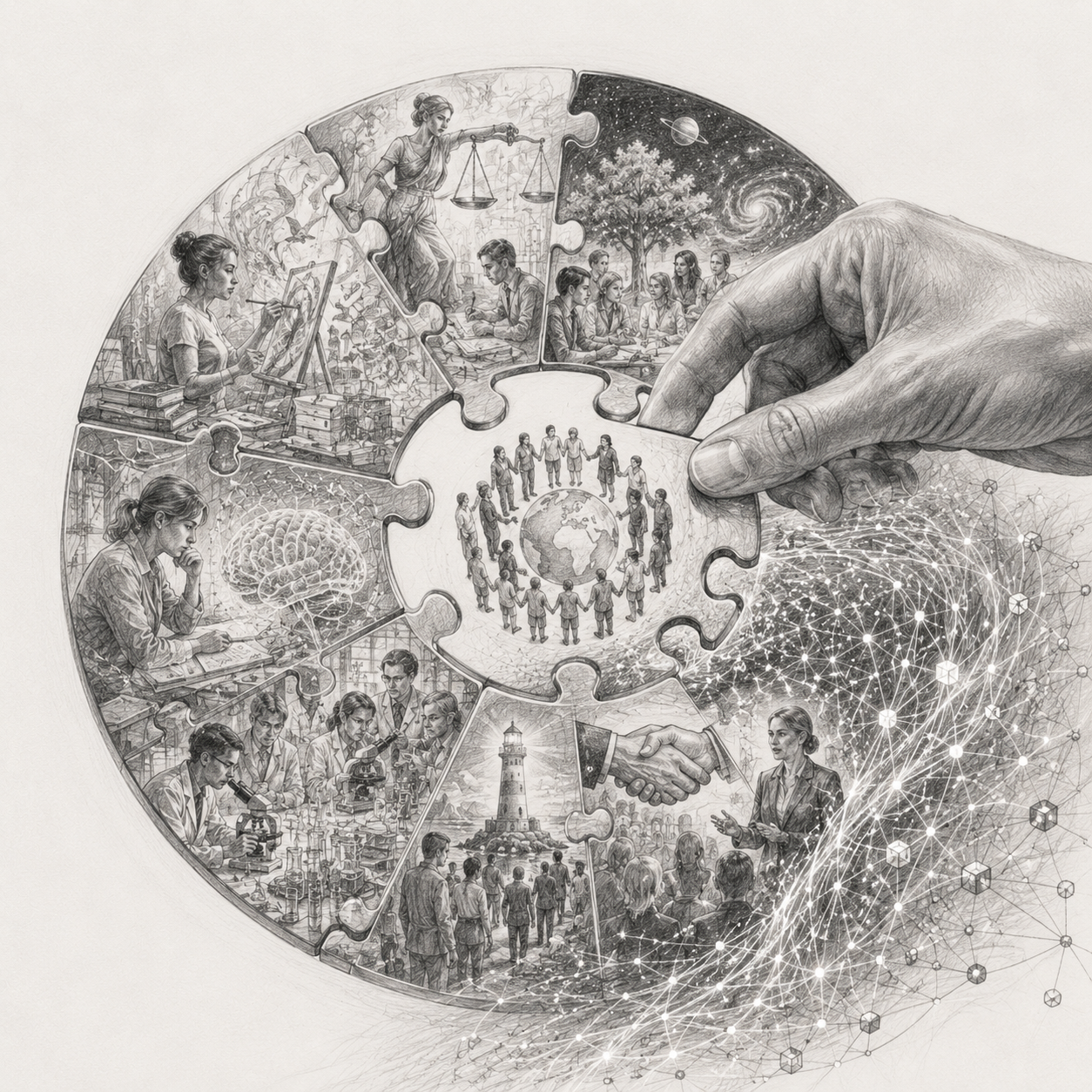
The research increasingly points toward a future in which humans and AI work together, each contributing different strengths.
Machines are good at processing information, identifying patterns and handling routine tasks.
Humans remain essential for creativity, judgment, trust, responsibility, leadership, ethics and social understanding.
The future of work is therefore not mainly a technological question. It is a human one.
The challenge before us is not to fear AI.
It is to prepare for it.
Workers must keep learning. Organizations must invest in people. Governments must build institutions that help societies adapt.
The machines are becoming more capable. What they ultimately mean for humanity will still depend on human choice.
Research Sources
[1] Frey, C.B. & Osborne, M.A. (2017). The Future of Employment: How Susceptible Are Jobs to Computerisation? Technological Forecasting and Social Change, 114, 254–280.
DOI: https://doi.org/10.1016/j.techfore.2016.08.019
[2] Arntz, M., Gregory, T. & Zierahn, U. (2016). The Risk of Automation for Jobs in OECD Countries: A Comparative Analysis. OECD Social, Employment and Migration Working Papers No. 189.
DOI: https://doi.org/10.1787/5jlz9h56dvq7-en
[3] Acemoglu, D. & Restrepo, P. (2019). Automation and New Tasks: How Technology Displaces and Reinstates Labor. Journal of Economic Perspectives, 33(2), 3–30.
DOI: https://doi.org/10.1257/jep.33.2.3
[4] Acemoglu, D. & Restrepo, P. (2020). Robots and Jobs: Evidence from US Labor Markets. Journal of Political Economy, 128(6), 2188–2244.
DOI: https://doi.org/10.1086/705716
[5] Autor, D.H., Levy, F. & Murnane, R.J. (2003). The Skill Content of Recent Technological Change: An Empirical Exploration. Quarterly Journal of Economics, 118(4), 1279–1333.
DOI: https://doi.org/10.1162/003355303322552801
[6] Autor, D.H. (2015). Why Are There Still So Many Jobs? The History and Future of Workplace Automation. Journal of Economic Perspectives, 29(3), 3–30.
DOI: https://doi.org/10.1257/jep.29.3.3
[7] Brynjolfsson, E., Li, D. & Raymond, L.R. (2023). Generative AI at Work. arXiv:2304.11771.
https://arxiv.org/abs/2304.11771
[8] Dell'Acqua, F., McFowland III, E., Mollick, E., Lifshitz-Assaf, H., Kellogg, K., Rajendran, S., Krayer, L., Candelon, F. & Lakhani, K.R. (2023). Navigating the Jagged Technological Frontier: Field Experimental Evidence of the Effects of AI on Knowledge Worker Productivity and Quality. Harvard Business School Working Paper 24-013.
https://www.hbs.edu/faculty/Pages/item.aspx?num=64700
[9] Brynjolfsson, E., Rock, D. & Syverson, C. (2021). The Productivity J-Curve: How Intangibles Complement General Purpose Technologies. American Economic Journal: Macroeconomics, 13(1), 333–372.
DOI: https://doi.org/10.1257/mac.20180386
[10] Raisch, S. & Krakowski, S. (2021). Artificial Intelligence and Management: The Automation–Augmentation Paradox. Academy of Management Review, 46(1), 192–210.
DOI: https://doi.org/10.5465/amr.2018.0072
[11] Mittelstadt, B.D., Allo, P., Taddeo, M., Wachter, S. & Floridi, L. (2016). The Ethics of Algorithms: Mapping the Debate. Big Data & Society, 3(2).
DOI: https://doi.org/10.1177/2053951716679679
[12] Floridi, L., Cowls, J., Beltrametti, M., Chatila, R., Chazerand, P., Dignum, V., Luetge, C., Madelin, R., Pagallo, U., Rossi, F., Schafer, B., Valcke, P. & Vayena, E. (2018). AI4People. An Ethical Framework for a Good AI Society: Opportunities, Risks, Principles and Recommendations. Minds and Machines, 28(4), 689–707.
DOI: https://doi.org/10.1007/s11023-018-9482-5
[13] Wachter, S., Mittelstadt, B. & Russell, C. (2017). Counterfactual Explanations without Opening the Black Box: Automated Decisions and the GDPR. Harvard Journal of Law & Technology, 31(2), 841–887.
DOI: https://doi.org/10.2139/ssrn.3063289
[14] Acemoglu, D. (2021). Harms of AI. NBER Working Paper No. 29247.
DOI: https://doi.org/10.3386/w29247
[15] Eloundou, T., Manning, S., Mishkin, P. & Rock, D. (2023). GPTs Are GPTs. An Early Look at the Labor Market Impact Potential of Large Language Models.
https://arxiv.org/abs/2303.10130
Author's Note: This article is based on peer-reviewed research and working papers from leading economists, AI researchers and policy scholars. While the long-term impact of AI remains uncertain, the evidence cited here suggests that technological change is more likely to reshape tasks and skills than eliminate human work altogether.


